Our knob-and-tube work in Enumclaw runs from finding which porcelain-knob circuits still carry power to replacing them with grounded wiring, retiring old fuse boxes and splitting the job into phases when you stay in the house. Enumclaw’s houses are older on average than Auburn’s or Kent’s, so original wiring turns up more often there.
About one Enumclaw home in six was built before 1950. That is a far larger share than in Auburn, though most of the homes in town are still newer than 1980.
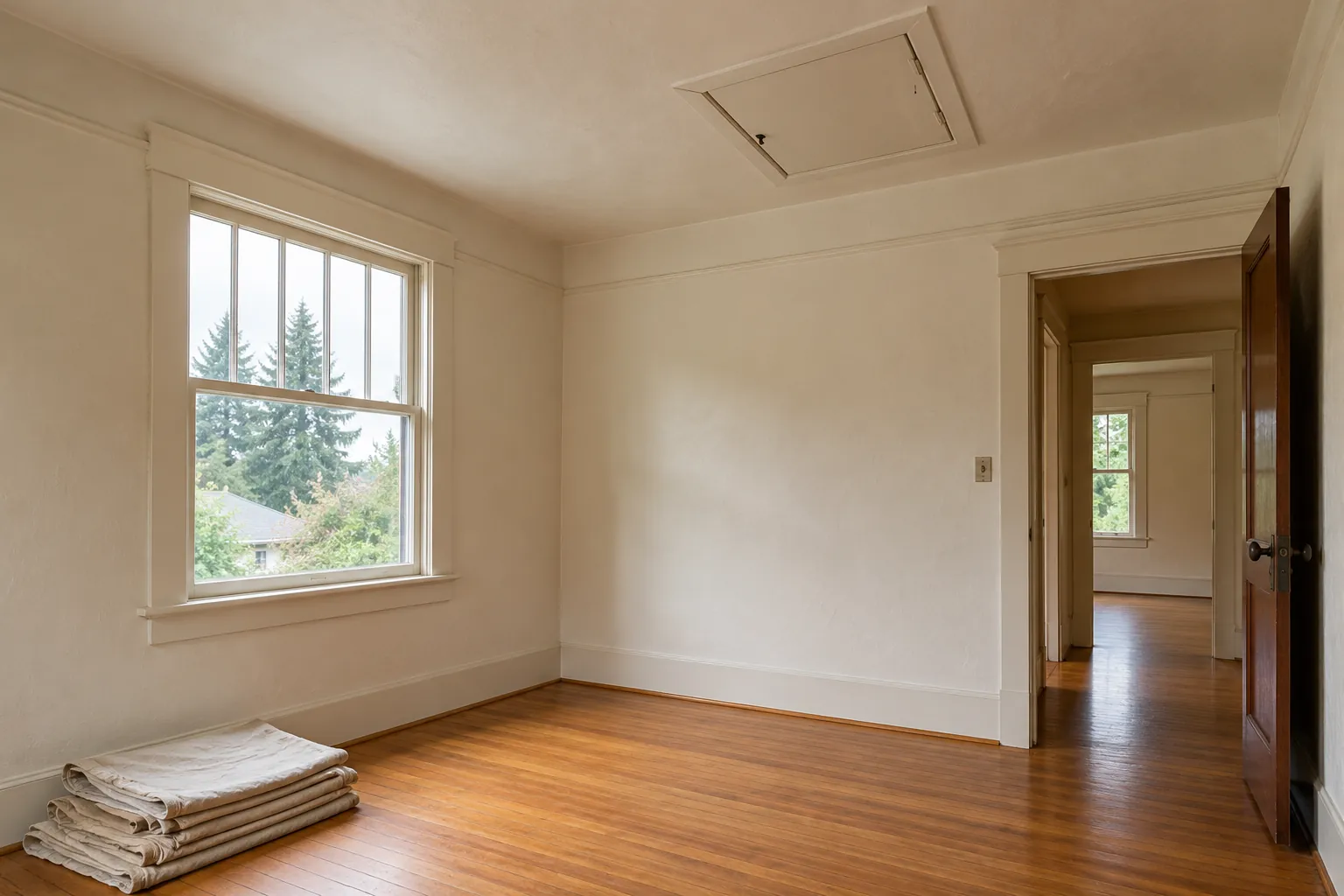
Early-1900s house in Enumclaw, one and a half stories
Original request
Replace the knob-and-tube that still feeds the two upstairs bedrooms and the hall
Found
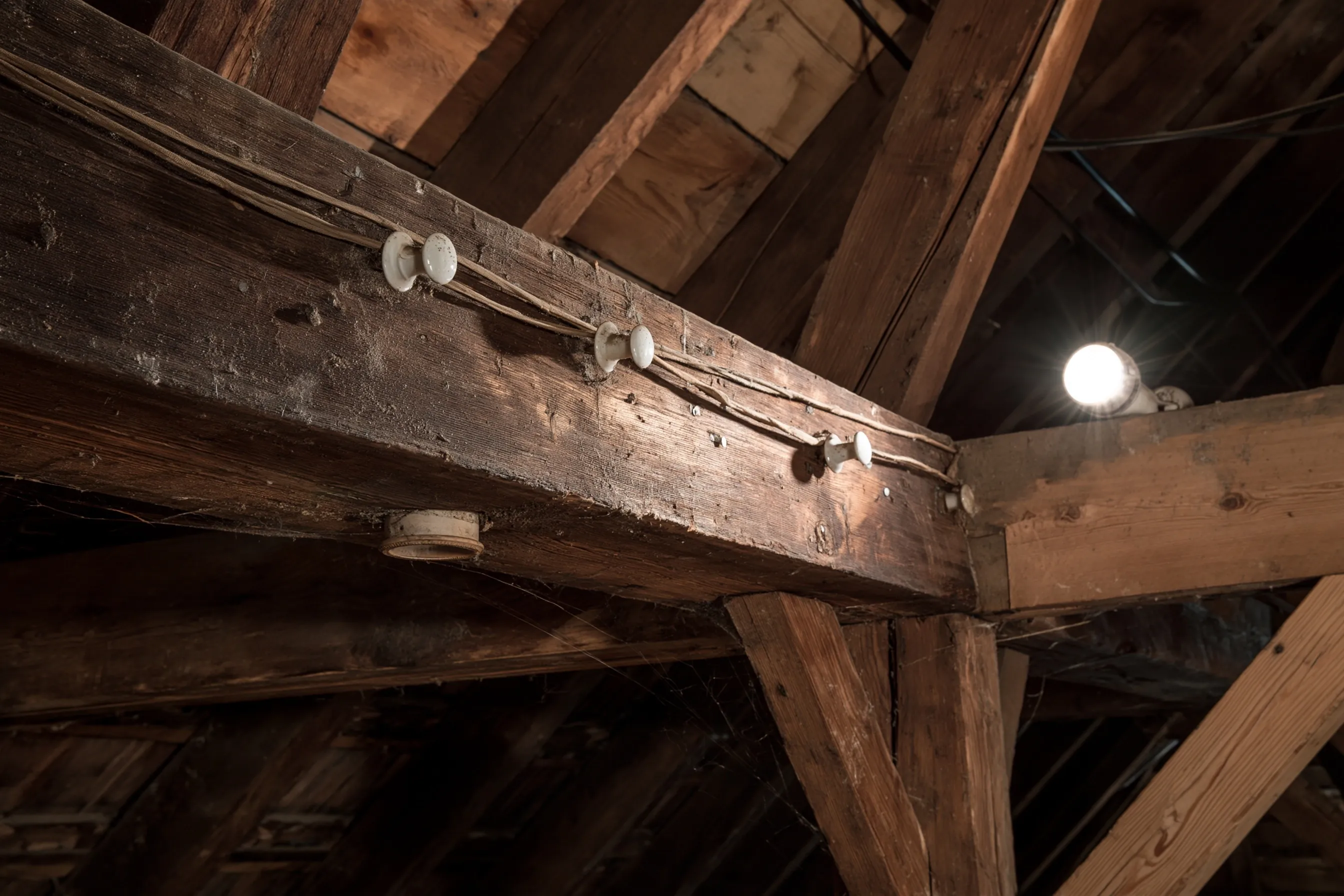
Two live knob-and-tube circuits running along the attic timbers; the main floor was rewired years ago
Work
New grounded cable fished down from the attic to every outlet, switch and ceiling light upstairs
Timeline
Four working days, then the inspection, then patching and attic insulation
Cost
$8,400
In this example, the main floor of an early-1900s Enumclaw house was rewired years ago, but the two upstairs bedrooms and the hall still run on knob-and-tube strung along the attic timbers. The owners want to insulate the attic, and they would rather replace the old wiring than have it surveyed and left in place.
In an Enumclaw house from the early 1900s, any knob-and-tube that remains is most likely to be visible in the attic or basement, possibly alongside later cable added room by room. We work out which of those runs are energized, replace them with grounded circuits, and leave you a record of which old runs stay dead in the walls. We handle old Auburn houses the same way.
Fuse box and early panel replacement
Where a house still has screw-in fuses, we check the fuse sizes against the wire first, since every plug fuse up to 30 amps fits the same socket. New grounded circuits need breaker spaces, and any knob-and-tube that stays needs protection sized to its wire. If insulation will go around it, Washington requires breakers or Type S fuses rated for the old wire. The details are under fuse box replacement.
Rewiring in phases
When you can’t move out, we split the rewire into inspected stages that follow the circuits, often a floor or one attic route at a time, and we schedule them so the kitchen and bathroom are never both out together. To see how phases are chosen, read about room-by-room rewiring.
Older homes in Enumclaw
A railroad and dairy town with early-1900s houses
Enumclaw grew up as a railroad and dairy town between the 1880s and the 1920s. Many of its older houses went up in the decades when knob-and-tube was the normal way to wire a house, before it was phased out from the 1930s.
Some of those houses were rewired long ago, some only had new circuits added for appliances, and some still rely on original runs upstairs. You can’t tell which from the street, so each house has to be traced from the panel out.
Electrical permits through L&I
Enumclaw does not run its own electrical program, so permits and inspections there go through Washington L&I. The city’s building department handles building permits, which are separate from the electrical permit.
Here, as anywhere in the state, we pull the permit before work starts, and the inspector sees the new wiring before it is covered. We check rural addresses outside city limits one by one before we apply for a permit.
What shapes a rewire
Additions and later wiring layered on old circuits
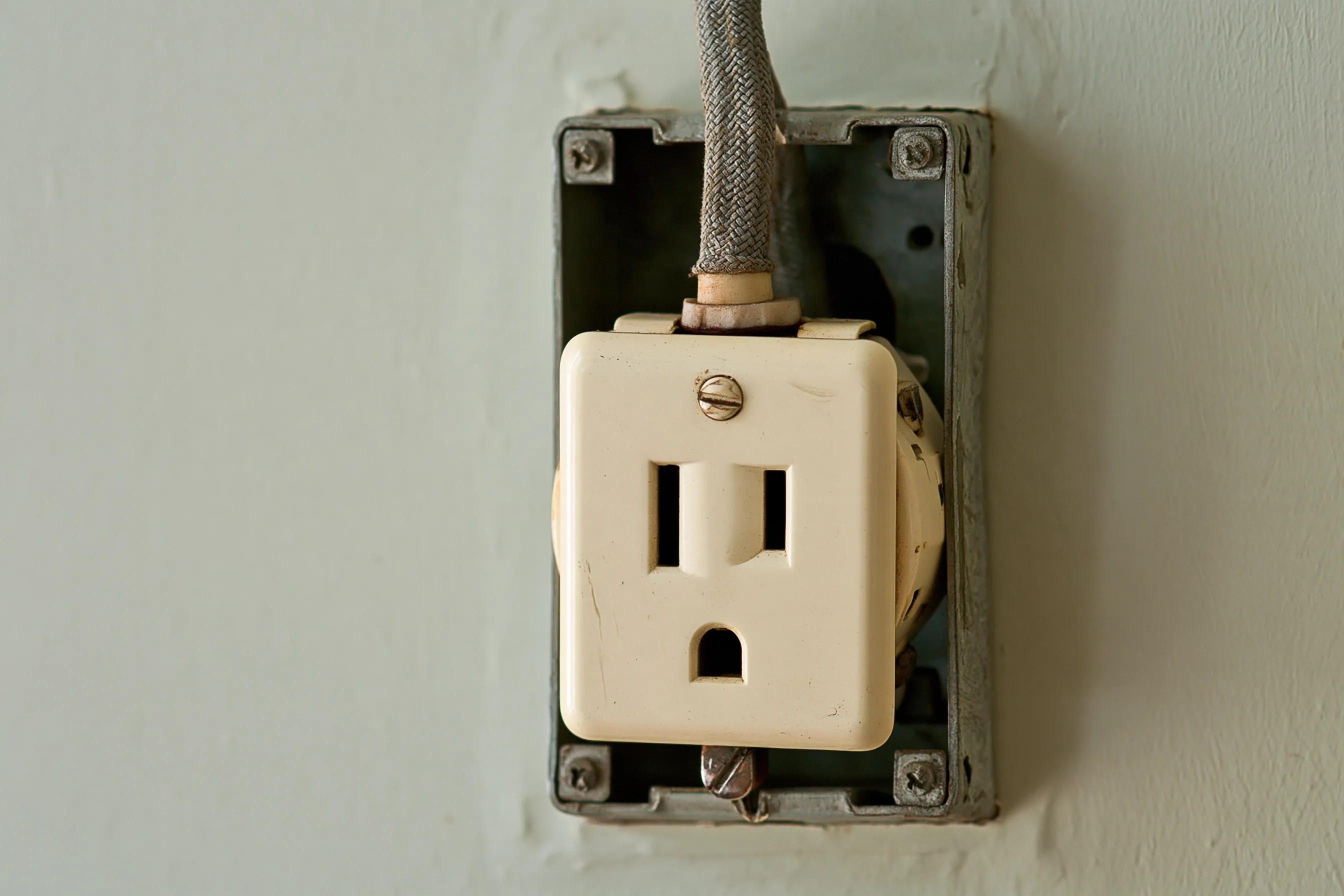
Older houses rarely have just one generation of wiring. A kitchen remodel from the 1950s may have brought cloth-jacketed cable without a ground, a later addition may hang off an original circuit, and a newer bathroom may be fully modern. Tracing sorts these into what is knob-and-tube, what is early ungrounded cable and what can stay. Most cable installed before the early 1960s has no ground wire either, so we decide with you up front whether those runs are part of the job.
Getting new cable to every floor
Access shapes the work more than floor area does. A full basement makes the main floor straightforward, and an open attic does the same for upstairs ceilings and walls. Rooms under a low roof, sloped ceilings and spaces with finished floors above and below are harder, and may need openings in the plaster to pass cable through. We walk the house to find those spots before we start, so you know the plan and any patching from the beginning.
Agree on what removal and rewiring include
Before we open any wall, we write the plan down. It says which circuits we replace and which, if any, stay on knob-and-tube for now. It also says whether the fuse box or panel changes, which rooms gain grounded circuits, and whether dead runs stay in the walls or the exposed attic and basement runs come out too.
The plan covers access and finish work as well: where we expect openings in plaster or ceilings, who patches them after inspection, and how furniture and stored items are handled in each phase. Settling those points up front avoids surprises in an older house, where wall cavities are not always where you expect.
At the end you get two records. The inspected L&I permit can be looked up online by address for permits bought since 2020, and our circuit list shows exactly what changed. Both help when an insurer or a future buyer asks.
Frequently asked questions
Who issues electrical permits in Enumclaw?
Washington L&I, because Enumclaw does not run its own electrical program. We still check each address, particularly rural properties outside city limits.
Are older Enumclaw homes likely to have knob and tube?
More likely than in Auburn or Kent, because a larger share of Enumclaw’s homes date from before 1950. Likely does not mean it is there, though. Many have been rewired, and the only way to know is to trace the circuits from the panel.
Do you rewire outbuildings?
Our focus is knob-and-tube in the house itself. If a detached garage or shop is fed from an old circuit in the house, that feed is part of the tracing, and we will tell you what we find.
A home inspection report says the house has knob and tube. Is that the final word?
It is a good reason to look further, but not a full answer. A general home inspector usually sees only what is visible in the attic, basement and panel and does not open walls or trace circuits. The next step is for us to confirm which runs are live, which are abandoned and how far the old wiring reaches, before we price the removal.
How is a knob and tube job priced?
After we have traced the house. The price depends on how many original circuits remain, access from the basement and attic, wall materials, any panel or fuse box change, the number of phases and finish work. Those vary widely in older houses, so our homepage gives ranges by job size and the written estimate comes after tracing.
My insurer asked about knob and tube. What should I send them?
Ask them to put the requirement in writing first. After the work, the inspected permit record and our list of what was replaced and anything that remains are the documents that help. Each insurer decides for itself what it accepts.
Send us the Enumclaw address, roughly what year the house was built, and anything you have noticed, such as exposed knobs in the attic, a fuse box, or a note from a home inspector or insurer. We'll get back to you soon with an estimate or any questions we have. Estimates are free and there's no obligation.