Fuse Box Replacement with Knob and Tube Rewiring in Auburn, Washington

Typical cost in Auburn

  • Fuse box swapped for a breaker panel, same service size$3,000 – $6,500+
  • Fuse box out and service raised to 200 amps (panel, meter base, service wires)$4,500 – $10,000+
  • New panel plus full rewire, house up to about 1,200 sq ft$15,000 – $30,000+
  • New panel plus full rewire, house about 1,200 to 2,000 sq ft$20,000 – $40,000+
  • 2026 state permit fee (L&I) for a service change up to 200 amps$110 – $230

Some older Auburn homes still have a screw-in fuse box or an early breaker panel. We replace those together with knob-and-tube removal, so the new equipment and the new grounded circuits fit each other. Before we order anything, we look at what the box protects, how each circuit is fused today and which runs are still original.

We do the same work in Puyallup and Enumclaw, where a larger share of houses predate 1950 and may still have original or early service equipment.

Request a free quote
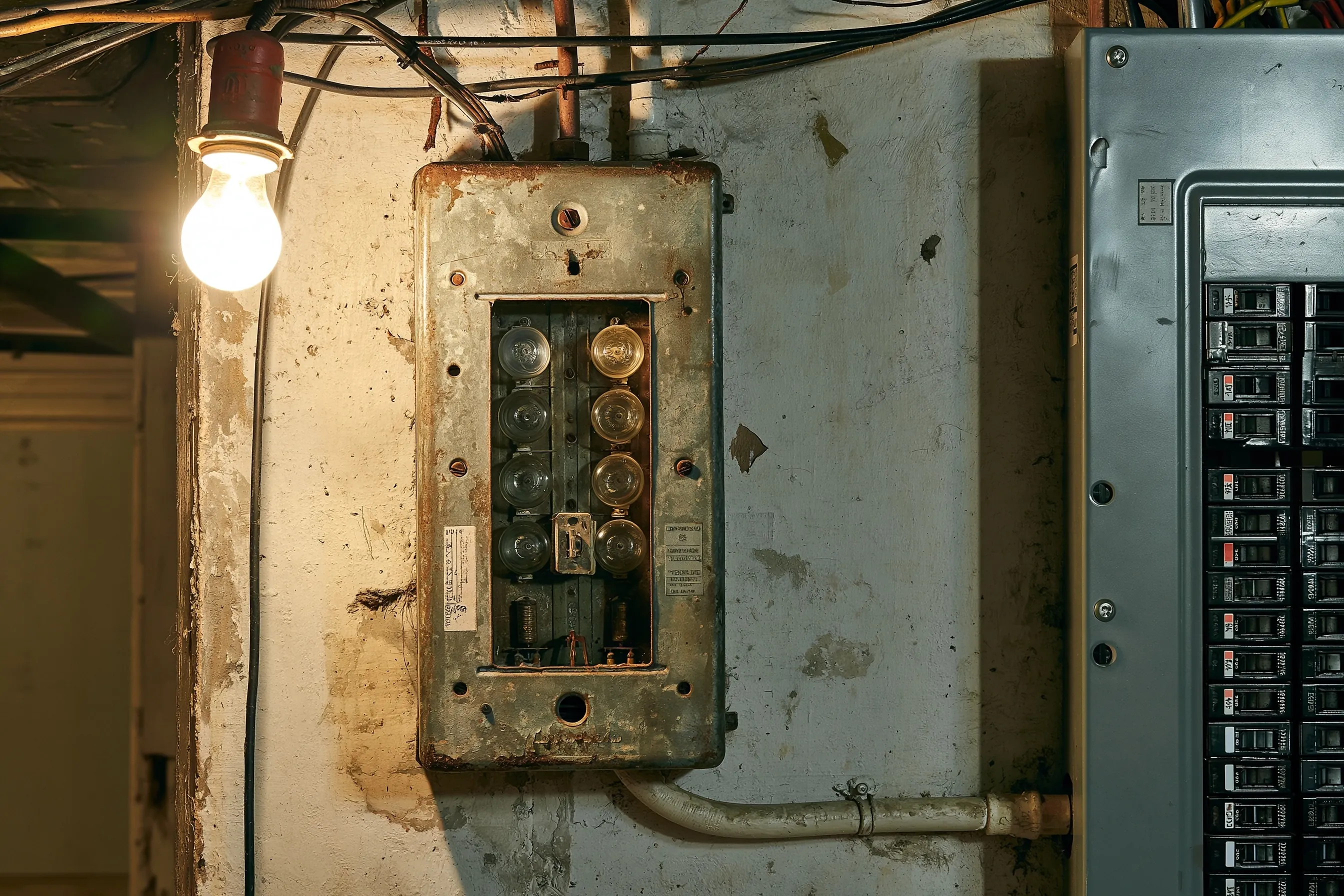
Old screw-in fuse box in a basement next to a modern breaker panel

Old service equipment found with knob and tube

Edison-base plug-fuse boxes

The oldest boxes take round, screw-in plug fuses with the same base as a light bulb. Every rating up to 30 amps fits the same socket, so a fuse that kept blowing was easy to swap for a bigger one, leaving thin wire behind a fuse that lets through far more current than the wire can carry. When we open one of these boxes, the first thing we check is the fuse ratings against the wire sizes behind them.

Type S fuses and adapters

Type S fuses fit an adapter that only accepts the matching rating, which stops anyone from putting in a bigger fuse. They were required for new installations from November 1941. If insulation will surround knob-and-tube that stays, Washington accepts either Type S fuses or breakers as protection, so an adapted fuse box can still be acceptable. It rarely leaves room for the new circuits a rewire adds, though.

Early breaker panels still feeding old circuits

A breaker panel on the basement wall says nothing about the wiring behind it. Many houses had the fuse box swapped decades ago while knob-and-tube branch circuits were simply landed on new breakers. We follow each breaker out to its circuit, note which are original, and check that the breaker sizes suit the wire they protect.

Why panel work and rewiring are planned together

Protection rules for any knob and tube that stays

If some knob-and-tube circuits stay after the panel changes, we size each breaker to that wire under the code in force when the permit is issued, and the inspector checks it. If insulation will surround those circuits, Washington requires breakers or Type S fuses rated for the old wire, and for the thin copper of that era that rating is often lower than owners expect.

New grounded circuits need somewhere to land

A rewire adds circuits for things the original house never had, such as kitchen counters, a bathroom and the laundry. Each gets its own line with a ground wire that has to be connected properly. We check every house to see whether the existing service can carry that and whether the panel has the spaces, and we don’t assume it needs a larger service.

Permits and inspection for Auburn addresses

Inside Auburn city limits, the permit and inspection for panel replacement and rewiring come from Washington L&I, not the City of Auburn. Some Auburn mailing addresses are actually in Federal Way, which issues its own electrical permits, so we check your street address first. We buy the permit before we start, and the inspection comes before anything is covered.

Changing service equipment can also mean a planned power shutoff, which we coordinate with the electric utility serving the house. You will know the plan before the day.

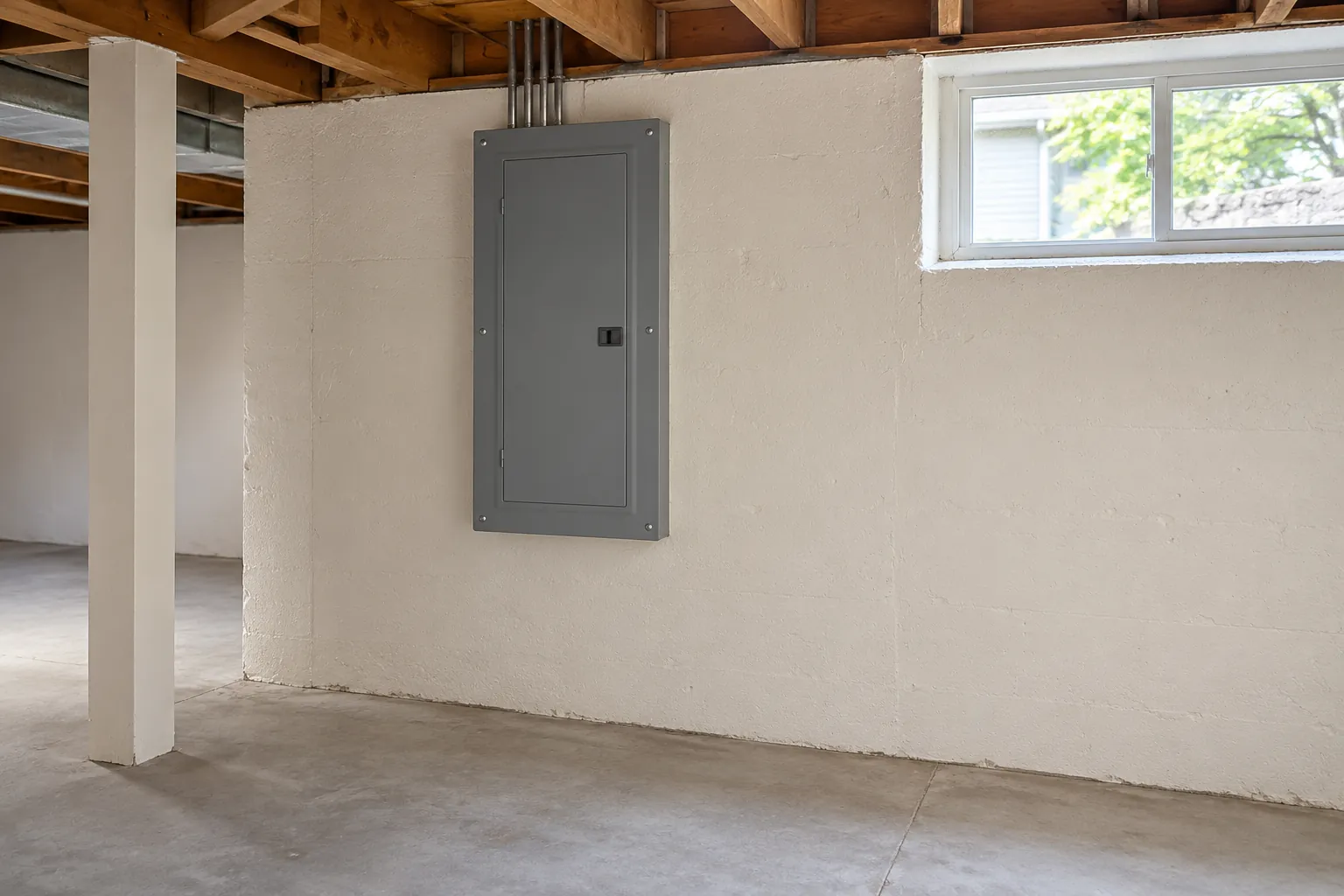
Gray breaker panel with its door closed on a painted basement foundation wall

Frequently asked questions

Do I have to replace my fuse box?

We know of no Washington rule that forces a working fuse box out. The usual reasons to replace one are oversized fuses, damaged equipment, no room for new circuits, or an insurer or lender who asks for it. A rewire usually tips the balance, because the new circuits need breaker spaces.

Can knob and tube be connected to a breaker panel?

Yes. We size each breaker to the old wire under the current code, and the inspector checks it. Whether a particular circuit should stay connected is a separate question about its condition, which we answer after tracing it.

Is a fuse box the same as knob and tube?

No. A fuse box is service equipment, and knob-and-tube is a way of wiring the branch circuits. A house can have one without the other, so we check them separately.

What affects the cost of fuse box replacement?

The panel size the house needs, whether the service entrance or meter base changes, how far the panel moves, how many old circuits are reconnected or replaced, and wall repair around the new location. The ranges at the top of this page cover typical jobs, and your written estimate follows once those are known.

If you are staying in the house, the panel change is often the first step of room-by-room rewiring. For the full picture, see how we remove knob-and-tube.

Request a free knob and tube quote

Tell us whether you have plug fuses, Type S adapters or an early breaker panel, roughly how old the house is, and the street address, so we can find out which office issues the permit. We'll get back to you soon with an estimate or any questions we have. Estimates are free and there's no obligation.

Call (253) 285-1913

Call (253) 285-1913